“How much do steel stairs cost?” is the first question we hear — and there is no honest one-sentence answer. Two staircases that look alike in a photo can differ in price twofold, depending on height, shape, treads and protection.
Instead of a single number, this article explains what goes into the price of steel stairs, what moves it most and how to get a quote that will not change later.
Why there is no price per metre or per step
Custom steel stairs are not an off-the-shelf product. Each set is drawn for a specific opening, height and use: the same number of treads in a straight staircase and a spiral one needs a completely different amount of steel and labour. So a price “per step” or “per metre” usually means either hidden extras later or a structure that was never calculated for your space.
What goes into the price
- Measuring and drawing — a site visit and working out the number and rise of the steps.
- The steel frame — stringers, cantilevers and connections, depending on section size and type.
- Fabrication — cutting, bending, welding and grinding the joints.
- Protection — powder coating, plus hot-dip galvanising for outdoor stairs.
- Treads — steel, timber or stone.
- Railing and handrail — infill, material and length.
- Installation — anchors, the connection to the slab or foundation, and site access.
Seven factors that move the price most
1. Height and number of steps
A taller floor means more steps, longer stringers and more steel. Loft stairs are shorter but often need more careful calculation because of the pitch.
2. Shape
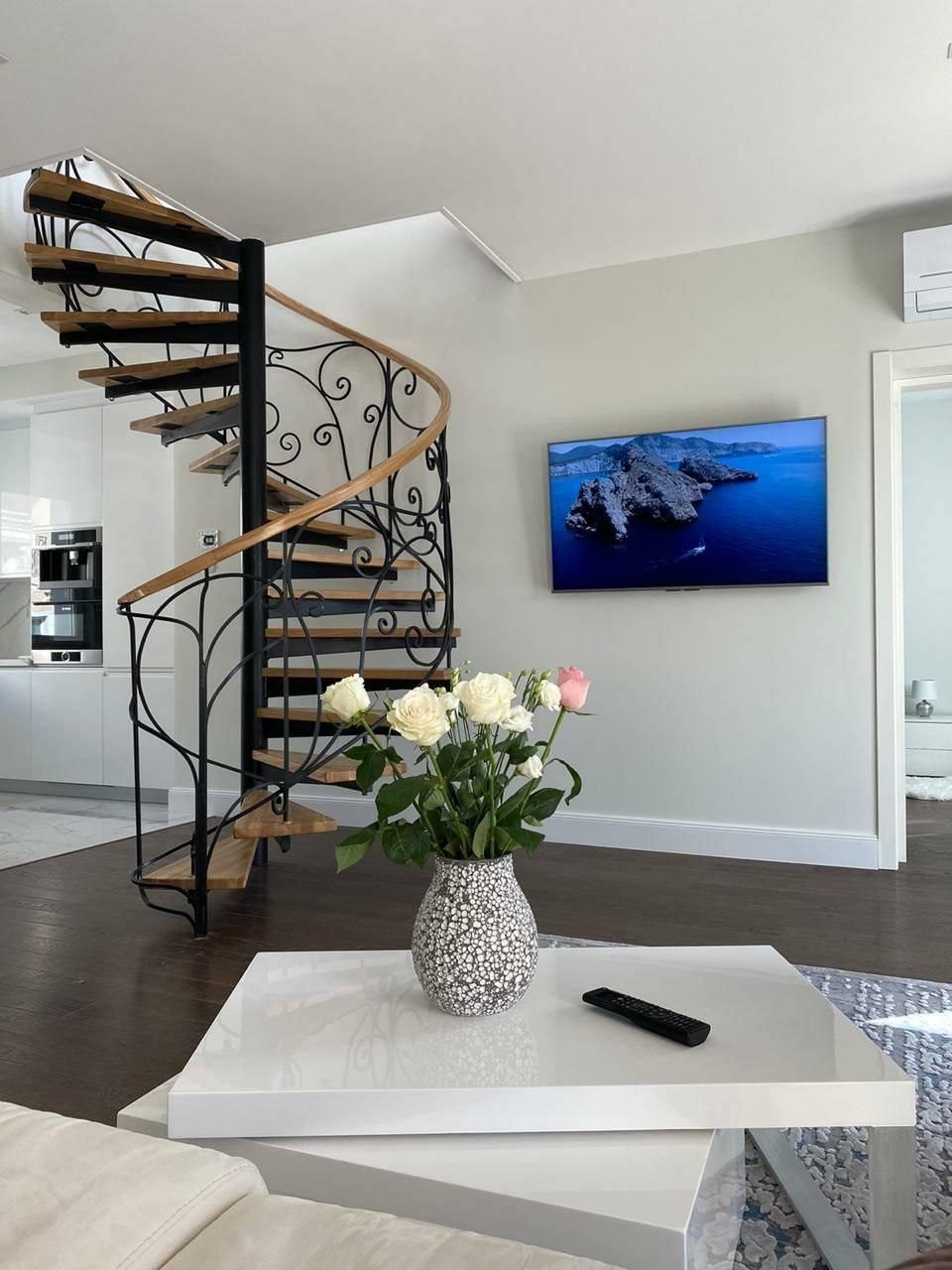
Straight stairs are the most affordable. A landing, a 90° or 180° turn and winder treads add hours of work and more complex joints, while custom spiral stairs are the most demanding to make.
3. Frame type
Twin side stringers are the most economical solution. A single central stringer or cantilevered stairs look lighter, but need heavier sections and more precise installation — and cost more.
4. Treads
Steel treads in chequer plate or grating are the most affordable and practical outdoors. Oak and stone treads raise the price, but also the value of the space.
5. Railing and handrail
A simple infill of vertical bars costs least. Glass, stainless cables and a stainless handrail cost more, though by the sea a stainless handrail pays for itself.
6. Protection: indoors or outdoors
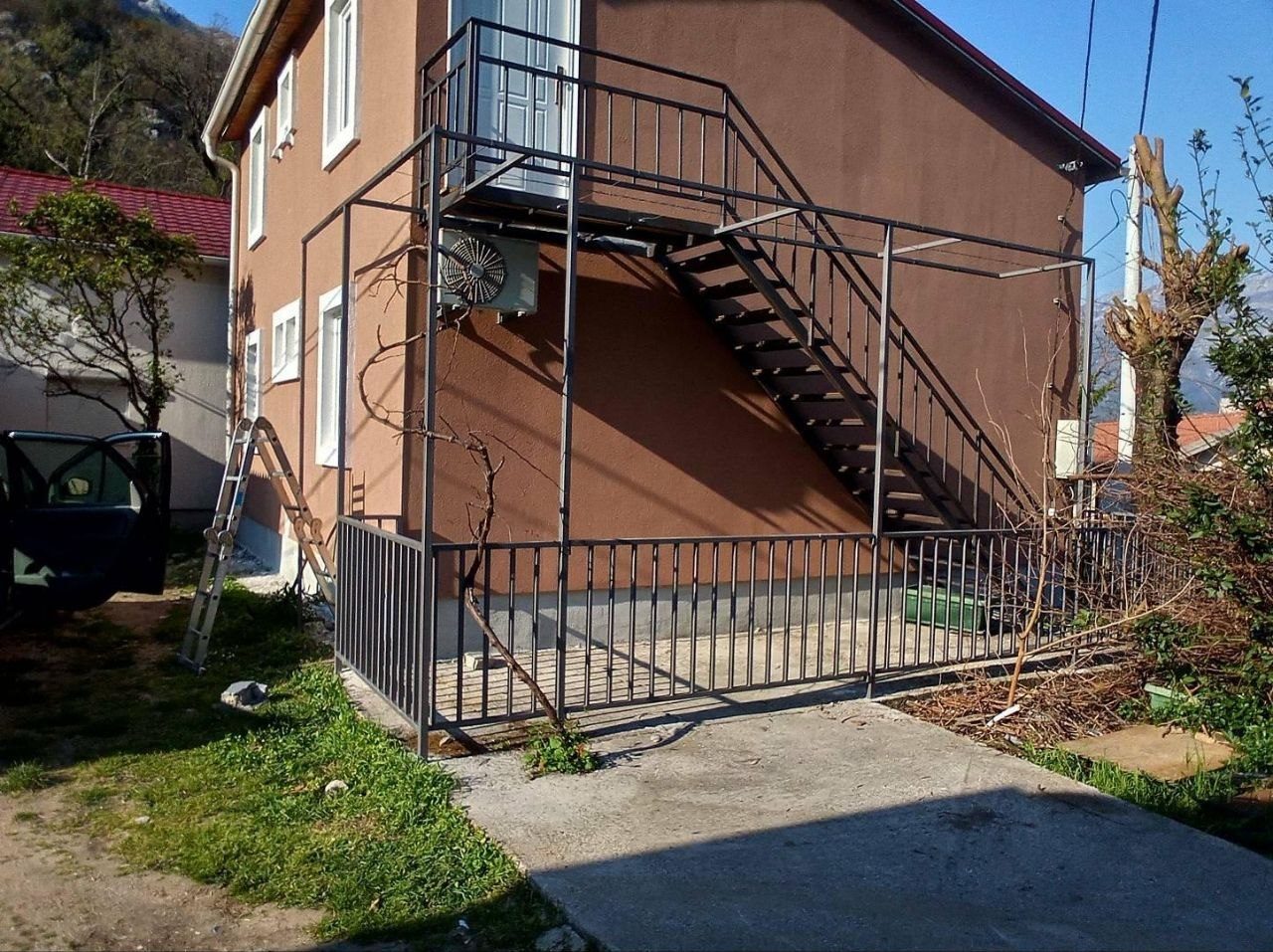
Interior stairs only need powder coating. Exterior steel stairs, especially on the coast, should be hot-dip galvanised before coating. That raises the initial price, but without it the money goes on repainting and repairs every couple of years.
7. Installation and access
Where the stairs go also affects the price: whether they anchor into a concrete slab or need a new foundation, whether the parts fit through the door and whether a vehicle can get close.
| Choice | Cheaper | More expensive |
|---|---|---|
| Shape | Straight stairs | With a turn, spiral |
| Frame | Twin side stringers | Single stringer, cantilevered |
| Treads | Steel (chequer plate, grating) | Oak, stone |
| Railing | Vertical bars | Glass, stainless cables |
| Protection | Powder coating (indoors) | Galvanising + coating (outdoors) |
Ready-made stairs from a shop, or made to measure?
Building supply stores in Montenegro sell kit spiral staircases — in September 2026 they cost roughly €860 to €1,740. That is a good solution if the standard diameter and height match your opening and a standard look is fine for you.
Made-to-measure stairs make sense when the opening is not standard, when the stairs are outdoors and must be galvanised, when they have to carry stone treads or when they are part of the interior and have to fit it. According to price lists published by fabricators in the region, custom steel spiral stairs with installation cost roughly €2,000 to €3,500, and straight stairs to an upper floor €1,500 to €3,000. These are not our prices but the range of the market — the exact figure depends on the factors above.
Where not to cut costs
- Protection by the sea. Saving on galvanising is the most expensive saving there is.
- Stringer size. A frame that bounces underfoot cannot be fixed without making it again.
- Anchors and the connection to the slab. A staircase is only as safe as what it rests on.
- Railing height and infill gaps. Especially if there are children in the house.
Where you can save
- Choose straight stairs instead of a turning flight if the space allows.
- A twin-stringer frame is both cheaper and stronger.
- A standard RAL colour costs less than special finishes.
- Your own joiner can fit timber treads — we prepare the frame for it.
What to send for an accurate quote
- The height from finished floor to finished floor (not to the screed).
- The size of the opening in the slab, or of the space where the stairs will stand.
- Photos of the space from several sides.
- Whether the stairs are indoors or outdoors, and how far the building is from the sea.
- What treads and railing you would like, if you already know.
With that information we send a drawing and a fixed price within 48 hours — the figure in the quote does not change during fabrication. Measuring on site is free within a 60 km radius.
See what we do on the custom steel stairs page, and if you are still choosing a type and dimensions, read our guide to the types and dimensions of steel stairs. You can send the details for a quote through our contact page.