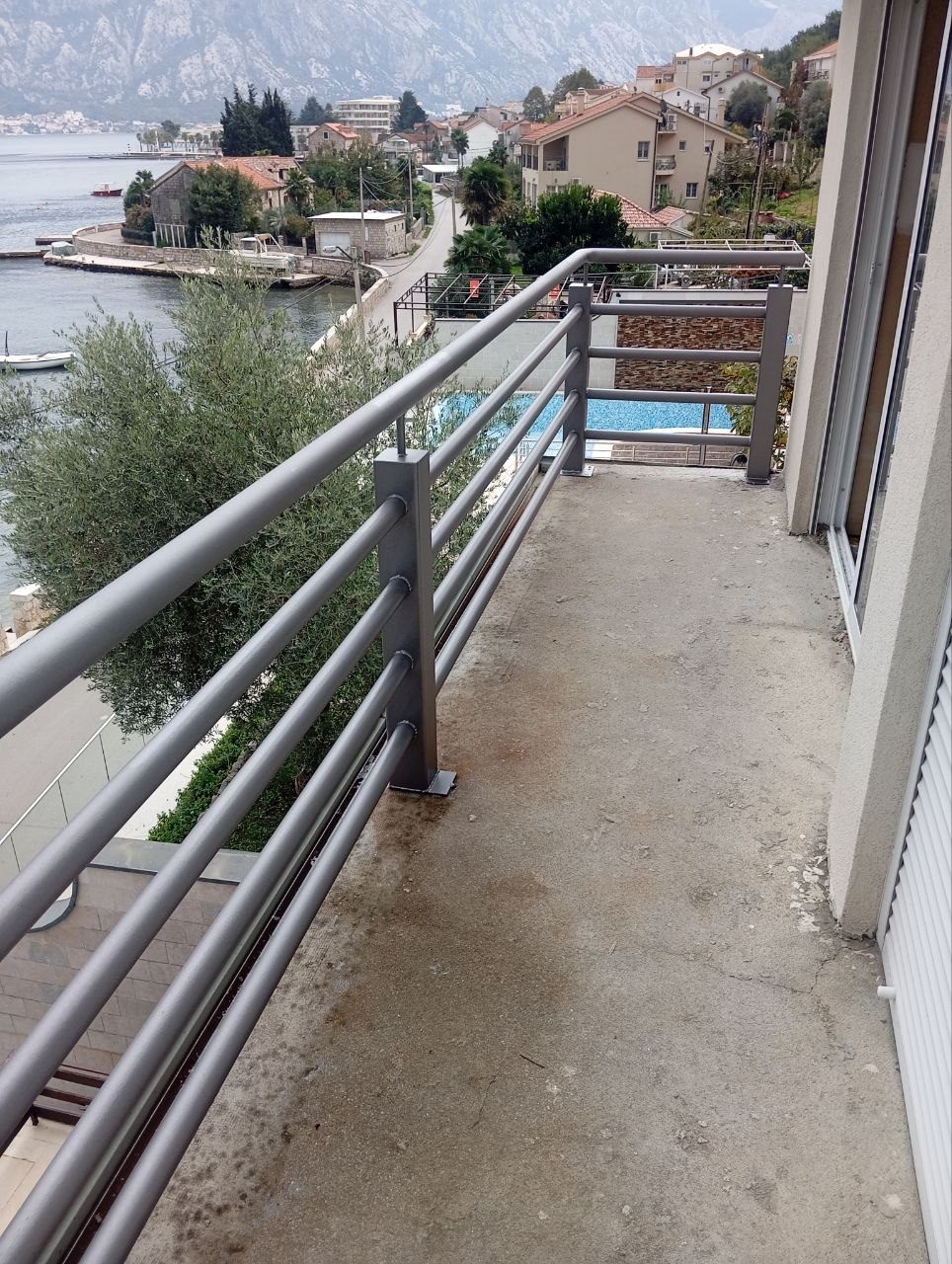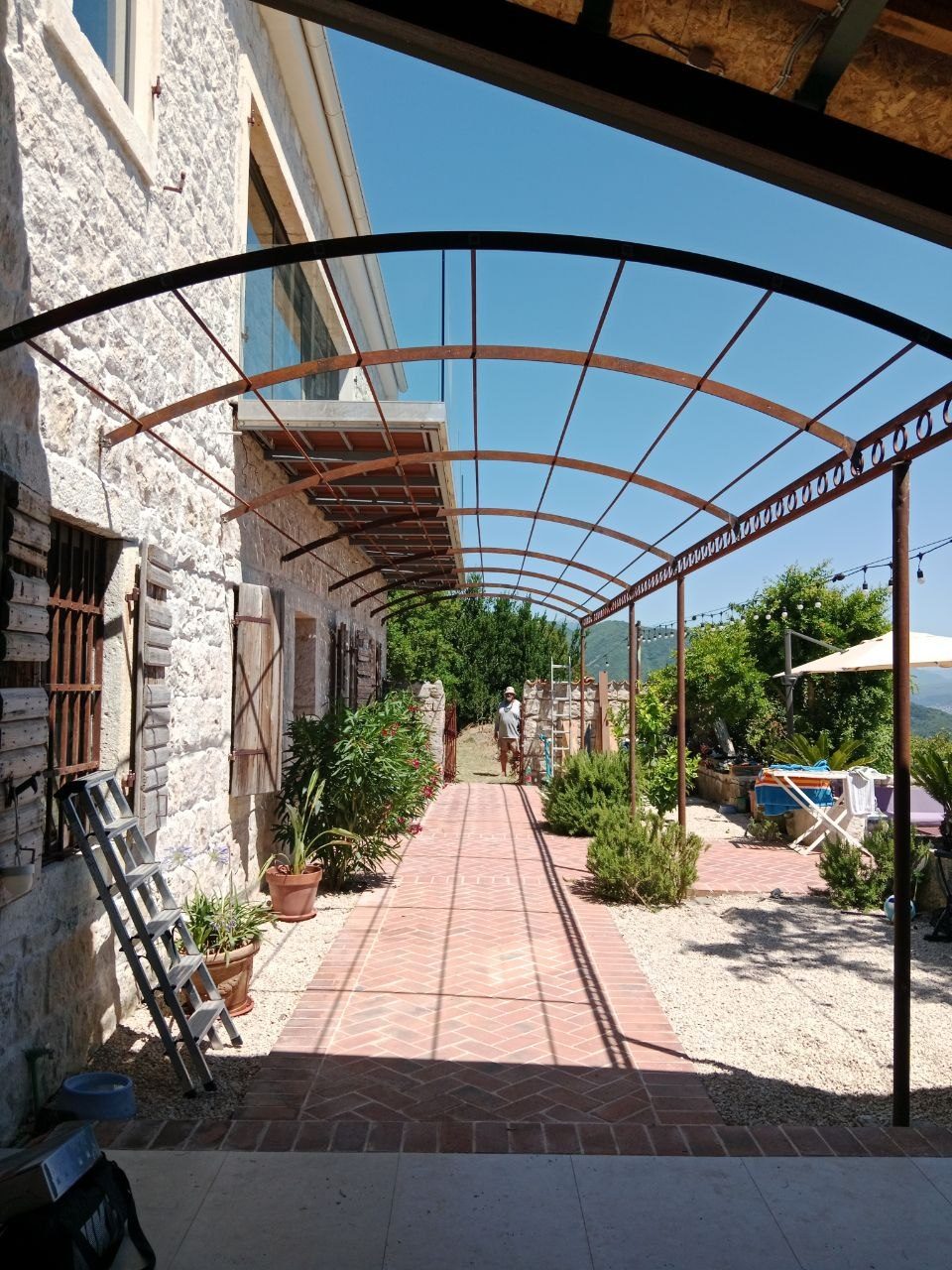
On the coast, steel does not fail from age but from salt. Droplets of sea water carry chlorides several kilometres inland, and they break through ordinary paint within one or two seasons. That is why the choice of protection matters more than the choice of section.
How aggressive the coast is
ISO 12944 grades environments by corrosivity from C1 to CX. A coast with moderate salinity is category C4; the first line by the sea and anything within reach of spray is C5. For comparison, the inside of a flat is C1. Protection that is fine for a yard in Podgorica is not enough for a terrace in Igalo.
Hot-dip galvanising
The finished part is dipped into molten zinc at around 450 °C. The zinc alloys with the steel and forms a coating that under EN ISO 1461 averages 55 µm on 1.5–3 mm sheet, 70 µm on 3–6 mm and 85 µm on thicker sections.
- It protects where it is scratched. Zinc is less noble than steel and corrodes sacrificially in its place, so a scratch does not start to rust.
- It gets inside hollows. Box sections are protected on the inside too, where no brush or spray gun can reach.
- It needs preparation in the workshop. Closed sections need vent holes, and part size is limited by the galvaniser’s bath. So galvanising is decided before fabrication, not after.
- It looks grey and matt and uneven, so on visible parts it is usually painted.
Powder coating
The powder is applied electrostatically and cured at around 180–200 °C, giving an even, hard finish in any RAL colour.
- Indoors it is enough on its own. For interior stairs, furniture and railings, powder coating over well-cleaned steel lasts for years.
- Outdoors by the sea it is not. The coating is a barrier: once it is damaged or salt gets in at an edge, rust creeps under the paint and lifts it in blisters.
Duplex: zinc underneath, paint on top
For steel by the sea, combining both layers is the most reliable option. The paint protects the zinc from salt and sun, and the zinc protects the steel wherever the paint is damaged. Together they last longer than the two layers would separately.
One detail matters: powder coating over zinc needs its own surface preparation and a curing cycle that does not drive gas out of the zinc. Skip it and the paint shows small craters and later peels off in sheets.
| Where the structure is | Recommended protection |
|---|---|
| Indoors (stairs, furniture, railings) | Powder coating |
| Outdoors, away from the sea | Hot-dip galvanising, optionally powder coated |
| Outdoors by the sea (terraces, canopies, external stairs) | Hot-dip galvanising + powder coating |
| Handrails and parts touched every day | Stainless steel — see 304 or 316 |
Maintenance
- Rinse the structure with fresh water two or three times a year, especially under handrails and in corners that rain does not wash.
- Clean a scratch down to metal and touch it up with a zinc-rich paint, then the top coat.
- Do not drill or weld galvanised parts on site without protecting the cut — that is where corrosion starts first.
On canopies, railings and external stairs by the sea, duplex protection is our standard. If you are not sure what your site needs, send a photo and the location through our contact page.